
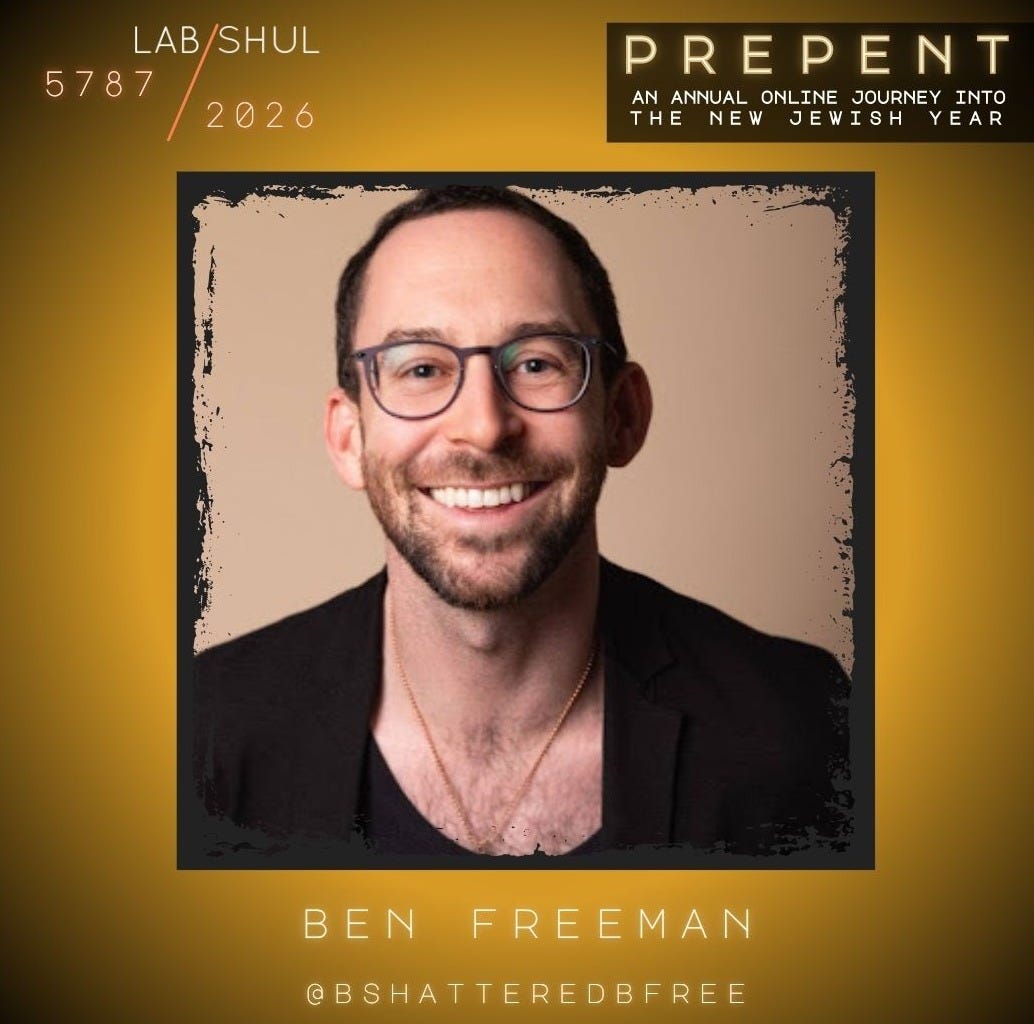
Reflection by Ben Freeman
WORD WATCH: OTHER
“I don’t even know how to be in the conversation anymore when the people on the other side are so insane.”
Ever heard someone say something like this? Ever said it yourself?
Today’s Prepent Word Watch is “other.” As in: “the other side,” “othering,” “the other man/woman,” “turn the other cheek.” When am I the other? When are you?
When I was a teenager, my dad instructed me to check the box marked “other” when an official form asked for my ethnicity, and to fill it in with “Ashkenazi Jewish.” Many years later, when he was on the verge of voting for a political candidate running as a Republican but who didn’t share my father’s ideological conservatism, I urged him to check the box marked “other” and write in his own. I’m not sure how much we reached each other. But checking the box in these cases is about declaring something, and asking to be counted or seen — and also about the limits of sublimating the complexity of our real lives to reductive systems of categorization and governance.
What might we want to watch about this loaded word and the way it shows up in our discourse? For one, the way it sets up a clearly defined battlefield, with teams that do not overlap or mix. Is the character of our disagreements ever so tidy and neat?
Our tradition knows this word too well.
You too must befriend the stranger, for you were strangers in the land of Egypt
(Deuteronomy 10:19).
Versions of this instruction play out across several of our Biblical books, and though ger גֵּ֑ר — the Hebrew word here translated as “stranger” — is not exactly the same as “other,” still there is a fundamental Jewish invitation to think of who we are not as people we have been before, perhaps still are or will be again. A check against becoming complacent inside the idea of belonging anywhere. Identities, and the politics undergirding them, shift all the time. Some shifts are helpful.
The Shift: This year, I invite you to shift your awareness around the concept of “other,” perhaps most specifically this idea of “the [political] other side.” Are you sure that what you see represented there is so foreign and far from you? What if instead we inquire whether what disturbs us belongs not to individual people we reject, but to deeper systems that set us up to be arrayed against each other in this way? This is not a call to stop standing up to bad behavior when it’s warranted. It is a call to stop flattening each other, a call to let it be a little messy.
Perhaps you were once someone you’d fervently disagree with now. I certainly have been. Maybe we start with befriending our own others, and then start questioning what we think we know about the rest. What will you mark on the next form?
This is such a thoughtful and insightful post. Thanks, Ben, for writing, for sharing. I especially loved your contextualizing the use of 'other' as an attempt "sublimating the complexity of our real lives to reductive systems of categorization and governance"